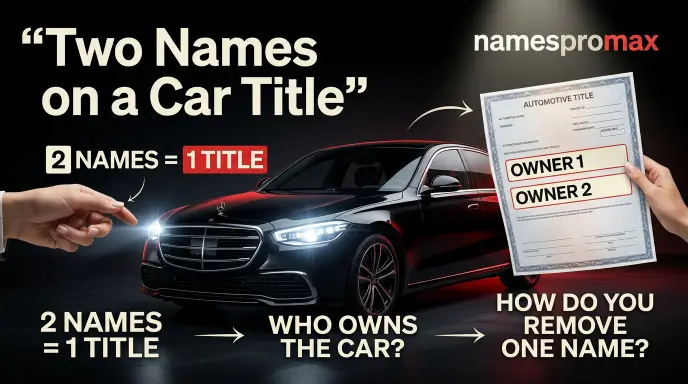
Having two names on a car title can be useful when a vehicle is jointly owned. But if one person no longer wants to be an owner, the title usually needs to be updated.
If you are wondering two names on car title how to remove one, the process generally involves getting the current co owner to release their ownership interest and applying for a new title.
The exact forms, signatures, fees, and requirements depend on your state.
Can You Remove One Name From a Car Title?
Yes, in many situations, one co owner can be removed from a vehicle title.
Usually, the person being removed must formally release their ownership interest. The remaining owner then applies for an updated title showing only their name.
However, the process can be different when:
- The co owner agrees to be removed
- The title lists the owners with “AND”
- The title lists the owners with “OR” or “AND/OR”
- There is an outstanding car loan
- The co owner has died
- The title has been lost
- The co owner refuses to sign
- The vehicle is jointly owned through a business or trust
Because title laws are handled by individual states, check your state motor vehicle agency for the exact requirements.
Check How the Names Are Connected
Before filling out any paperwork, look closely at the vehicle title.
The names may be connected with wording such as:
- AND
- OR
- AND/OR
- A slash between the names
- OR SURVIVOR
- Joint Tenants With Right of Survivorship
This wording can affect how ownership is transferred.
For example, California DMV guidance says that when co owners are joined by “and,” each owner must sign to release ownership.
When they are joined by “or” or “and/or,” only one owner’s signature may be required for a transfer in California.
That does not mean every state follows exactly the same rule, so use your state’s requirements rather than relying only on the wording shown above.
How to Remove One Name From a Car Title
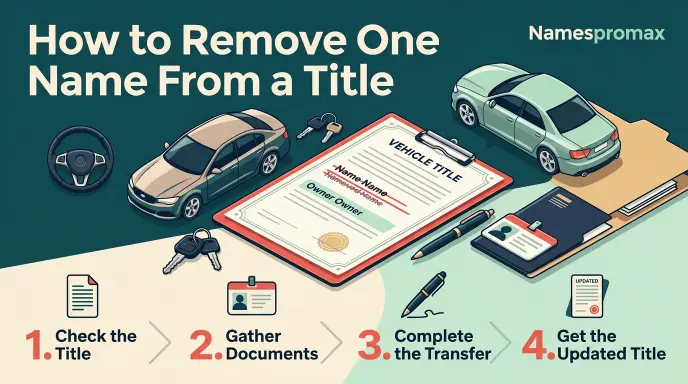
1. Find the Current Vehicle Title
Start with the original vehicle title.
Check that the following information is correct:
- Vehicle identification number (VIN)
- Vehicle year and make
- Current owners’ names
- Lienholder information, if applicable
- Ownership wording between the names
If the title is lost, you may need to request a replacement before completing the ownership change.
2. Ask the Other Owner to Release Their Interest
If both owners agree to the change, the process is usually much easier.
The co-owner being removed may need to sign the title or a state-specific ownership transfer form. Some states may also require a separate application or affidavit.
Do not simply cross out the person’s name unless your state’s motor vehicle agency specifically tells you to do so. Incorrect alterations can create problems with the title.
For example, California DMV uses specific forms for certain ownership corrections and warns that inaccurate ownership information can result in problems with the certificate.
3. Complete the Required Title Application
The remaining owner generally needs to submit an application for a new or updated title.
Depending on the state, you may need:
- Current vehicle title
- Title application
- Identification
- Proof of insurance
- Odometer disclosure
- Bill of sale or release of interest
- Lien release
- Applicable fees
Not every state requires all of these documents.
4. Deal With Any Existing Car Loan
A vehicle loan can make removing a co owner more complicated.
If a lender or lienholder is listed on the title, contact the lender before submitting the ownership change. The lender may need to approve the change or provide documentation.
For example, Virginia DMV states that a lienholder must be contacted when changes need to be made to an existing title that has a lien.
If the loan is paid off, you may also need proof that the lien has been satisfied.
5. Submit the Documents to Your State DMV
Once the paperwork is complete, submit it through the method allowed by your state.
This might include:
- In-person DMV service
- Online title services
- County tax office
- Authorized title agency
The agency will review the documents and, if approved, issue a new title showing the remaining owner.
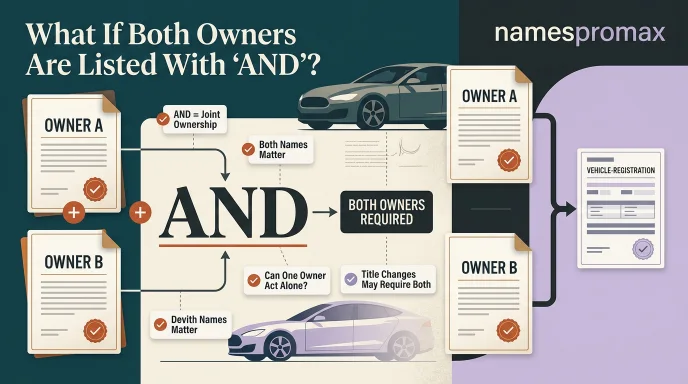
What If Both Owners Are Listed With “AND”?
When two owners are connected by “AND,” both owners commonly need to participate in the ownership transfer.
For example:
John Smith AND David Smith
If David wants to give up his ownership interest, David may need to sign the required release documents. John may then apply for a new title in his name.
California, for example, requires the signatures of all owners when co-owners are joined by “and.”
Because requirements vary by state, confirm the rule with your local motor vehicle agency.
What If the Title Says “OR”?
“OR” can give co owners different transfer rights from “AND.”
For example:
John Smith OR David Smith
Some states allow one listed owner to complete certain title transactions without the other owner’s signature.
California DMV states that when co-owners are joined by “or” or “and/or,” the signature of only one owner is required for certain ownership transfers.
Still, the exact rule depends on the state where the vehicle is titled.
What If the Other Owner Refuses to Sign?
This can be more difficult.
If the other person is legally listed as a co owner and refuses to release their interest, you generally cannot simply erase their name from the title.
Your options may depend on:
- How the title is worded
- Your state’s ownership laws
- Any written agreement between the owners
- If the vehicle was purchased jointly
- If a court order exists
If ownership is disputed, you may need legal advice or a court order before the DMV can change the title.
What If the Co Owner Has Died?
The process can be different when one owner has died.
You may need documents such as:
- Certified death certificate
- Original vehicle title
- Estate documents
- Affidavit
- Proof of relationship or inheritance
- Application for a new title
The exact requirements depend on how the vehicle was titled.
For example, Virginia allows certain surviving co owners with rights of survivorship to remove a deceased owner’s name by providing the required death certificate and title documents.
Other ownership arrangements may require involvement from an executor, administrator, or heir.
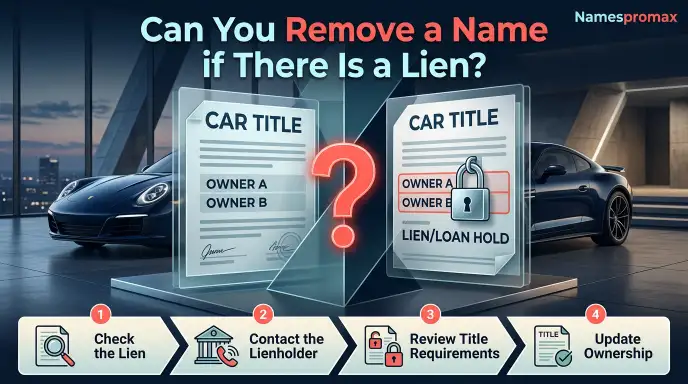
Can You Remove a Name if There Is a Lien?
Sometimes, but you may need the lienholder’s involvement.
A bank, credit union, or finance company may have a legal interest in the vehicle until the loan is paid.
Before changing the title, ask the lender:
- If the co owner can be removed from the loan
- If the co owner can be removed from the title
- If refinancing is necessary
- If a lien release is required
- What documents the lender needs
Removing someone’s name from the title does not automatically remove that person’s responsibility for a vehicle loan.
Does Removing a Name From the Title Remove Them From the Loan?
Not necessarily.
A vehicle title and an auto loan are related but separate matters.
Someone may be removed from the vehicle title while still having financial responsibility under a loan agreement.
If the person is also a borrower or co-borrower, contact the lender before assuming that their loan obligation has ended.
The lender’s records and the DMV’s title records should both be updated when necessary.
Do Both Owners Have to Go to the DMV?
Not always.
Some states allow the required ownership documents to be signed separately, mailed, notarized, or submitted through other approved methods.
If both owners must appear in person depends on the state and the specific transaction.
Check your state’s official motor vehicle agency before visiting an office.
What Documents Might You Need?
The exact paperwork varies, but a typical title change may involve:
| Document | Why It May Be Needed |
| Current vehicle title | Shows existing ownership |
| Title application | Requests the new title |
| Identification | Confirms the owner’s identity |
| Release of interest | Removes the co-owner’s ownership claim |
| Bill of sale | May document a transfer |
| Lien release | Shows that a lien has been satisfied |
| Death certificate | Used when an owner has died |
| Estate documents | May be required for inherited vehicles |
| Odometer disclosure | Required in some title transfers |
| Payment | Covers title and related fees |
Your state may require additional documents.
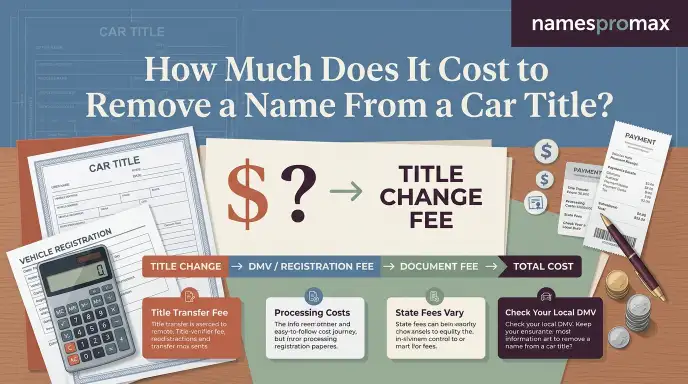
How Much Does It Cost to Remove a Name From a Car Title?
The cost varies by state.
You may have to pay:
- Title replacement or transfer fees
- Registration fees
- Processing fees
- Taxes, depending on the type of transfer
- Notary fees, if required
Some ownership changes may qualify for tax exemptions, while others may be treated as a taxable transfer.
Check the current fee schedule from your state’s motor vehicle agency before submitting your paperwork.
How Long Does It Take?
Processing time depends on the state and how you submit the application.
Some title changes can be handled quickly at an office, while mailed applications may take longer. Online services may also be available for certain transactions.
If a lender, estate, court order, or missing title is involved, the process can take longer.
Common Mistakes With Two Names on a Car Title
Removing a co owner’s name may seem simple, but paperwork mistakes can delay the process.
Avoid these common problems:
Signing the Wrong Section
Vehicle titles often contain several signature areas. Read the instructions carefully before signing.
Changing the Title Yourself
Do not erase or alter ownership information unless your state’s agency specifically instructs you to do so.
Ignoring the Lienholder
If a lender is listed, contact the lender before making ownership changes.
Forgetting the New Title Application
Signing the old title may not be enough. A separate title application may be required.
Assuming Every State Has the Same Rules
Title procedures differ between states. Always verify the current requirements for the state where the vehicle is titled.
What Happens After the Name Is Removed?
Once the state approves the transaction, a new title should reflect the updated ownership.
The remaining owner should check the new document carefully for:
- Correct legal name
- Correct VIN
- Correct vehicle information
- Correct lien information
- Correct ownership status
If anything is wrong, contact the motor vehicle agency promptly.
Frequently Asked Questions About Two Names on a Car Title
Q1. Can I remove someone from a car title without their signature?
Answer: It depends on your state’s laws and how the vehicle is titled. If the other person has a legal ownership interest, their signature or another legally valid method of releasing that interest may be required.
Q2. What if both names are on the title but only one person paid for the car?
Answer: Payment history does not automatically determine what appears on the legal title. If someone is listed as an owner, their ownership interest may need to be formally released or resolved through the applicable legal process.
Q3. Can I remove my name from a car title?
Answer: Usually, you can request to release your ownership interest by completing the required title transfer documents. The exact procedure depends on your state and the way the vehicle is jointly titled.
Q4. Does removing my name from the title remove me from the car loan?
Answer: No. Removing a name from the title does not automatically remove that person’s responsibilities under a loan agreement. Contact the lender separately.
Q5. What happens if my co owner has died?
Answer: The process usually involves the deceased owner’s death certificate and other documents. The exact requirements depend on the ownership arrangement and state law.
Q6. Can I remove a co owner if there is still a loan on the car?
Answer: It may be possible, but the lender may need to approve the change. Contact the lienholder before submitting the title paperwork.
Q7. Do I need a new title after removing a co owner?
Answer: In many cases, yes. The state may issue a new title showing only the remaining owner.
Q8. Can I remove a name from a title online?
Answer: Some states offer online title services for certain ownership changes, but online availability depends on the state and transaction.
Q9. What if I lost the vehicle title?
Answer: You may need to apply for a replacement title before completing the ownership change. Some states combine replacement and transfer procedures.
Q10. Can a court remove someone from a car title?
Answer: A court may become involved when ownership is disputed or when a required owner will not cooperate. The appropriate legal process depends on the circumstances and state law.
Final Thoughts
If you have been searching two names on car title how to remove one, the first step is to check the title carefully and identify how the co owners are listed.
Then determine if the other owner must sign a release, if a lender is involved, and which forms your state requires.
When both owners agree, the process is often handled through the state’s title transfer procedure.
If the ownership is disputed, a lien exists, or one owner has died, additional documentation may be necessary.
For the most accurate requirements, use the official motor vehicle agency for the state where the vehicle is titled.
Related Naming Guides:
- Good Names for Restaurants: Creative, Catchy & Memorable Ideas
- Female Goat Names: Cute, Funny, Unique & Beautiful Ideas
- Unique Male Cat Names for Orange Cats: Cute, Cool & Rare Ideas

I’m Cole Harrison, a naming enthusiast with 8 years of experience researching names, meanings, origins, and cultural influences. I love discovering names that are unique, memorable, and full of personality. Through my work, I help readers find the perfect names for babies, pets, characters, and creative projects.